
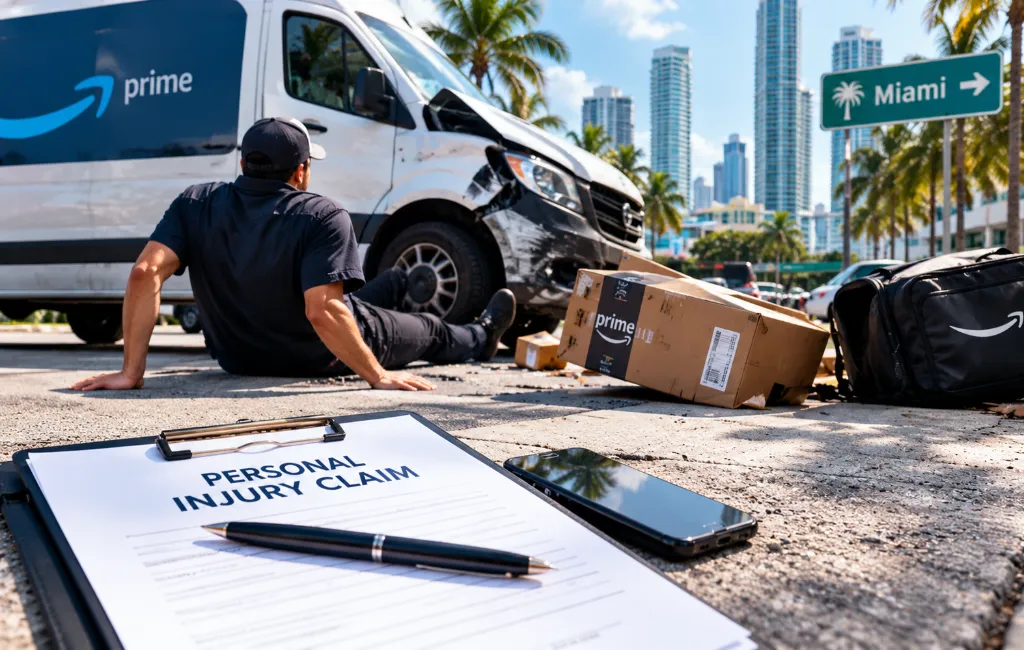
Delivery vehicles are a common sight throughout Miami, from busy downtown streets to residential neighborhoods and major highways. Although delivery drivers help keep businesses running, rushed schedules, distracted driving, and unsafe driving practices can contribute to serious accidents. If you have been injured in a collision involving a delivery van, truck, or courier vehicle, you may be wondering whether you can sue the delivery company for your injuries.
Yes, you may be able to sue a delivery company after an accident in Miami, depending on the circumstances, the driver’s actions, and the company’s potential legal responsibility. Understanding Florida personal injury law, identifying the responsible parties, and gathering strong evidence can help you protect your rights and pursue compensation.
When Can You Sue a Delivery Company After an Accident?
You may have grounds for a personal injury claim when a delivery driver or company acts negligently and causes an accident resulting in injuries or financial losses. Negligence generally involves a failure to exercise reasonable care under the circumstances.
For example, a delivery driver might cause a crash by speeding to meet a delivery deadline, running a red light, texting while driving, or failing to yield to a pedestrian. If the driver’s negligence causes an injury, you may be entitled to seek compensation.
A delivery company may also be held responsible for an employee’s negligence when the accident occurs within the scope of employment. In other situations, a company may face direct liability for its own negligence, such as inadequate driver training or negligent hiring, if the evidence supports that claim.
However, not every accident involving a delivery vehicle automatically makes the company liable. Independent contractor arrangements, employment relationships, insurance coverage, and the specific facts of the collision can affect your legal options.
What Compensation Can You Recover After a Delivery Truck Accident?
An accident involving a commercial delivery vehicle can lead to significant medical expenses, missed work, and lasting physical or emotional challenges. Depending on the evidence and applicable law, an injured person may pursue compensation for several categories of damages.
Common types of compensation include:
- Medical expenses: Emergency treatment, hospital bills, rehabilitation, medication, and future medical care.
- Lost wages: Income lost while recovering from accident-related injuries.
- Reduced earning capacity: Financial losses when injuries limit your ability to work in the future.
- Pain and suffering: Physical discomfort, emotional distress, and the impact of injuries on everyday life.
- Other financial losses: Reasonable accident-related expenses supported by evidence.
In fatal accidents, eligible surviving family members may have a wrongful death claim under Florida law.
The amount of compensation depends on factors such as injury severity, medical documentation, available insurance, and the parties’ respective responsibility for the accident. An experienced personal injury attorney can evaluate the available evidence and help determine which damages may be recoverable.
How Common Are Delivery Vehicle Accidents?
Delivery drivers share Miami’s roads with commuters, cyclists, motorcyclists, and pedestrians. Understanding the broader traffic safety context helps explain why collisions involving commercial vehicles deserve careful attention.
The following table presents general U.S. traffic safety statistics rather than Miami-specific delivery accident figures.
| General traffic safety statistic | Reported figure |
| U.S. traffic fatalities in 2022 | 42,514 |
| U.S. traffic fatalities in 2023 | 40,901 |
| U.S. traffic fatalities in 2024 | Approximately 39,345 |
Regardless of the overall statistics, determining responsibility for an individual crash requires a fact-specific investigation.
Who Can Be Held Liable for a Delivery Vehicle Accident?
Identifying the responsible parties is an important step in pursuing compensation. Depending on the circumstances, liability may extend beyond the individual driver.
Potentially responsible parties include:
- The delivery driver: If careless or reckless driving caused the collision.
- The delivery company: If it is legally responsible for an employee’s conduct or its own negligent practices.
- A third-party logistics provider: If its actions or contractual responsibilities contributed to the accident.
- A vehicle maintenance provider: If negligent repairs or maintenance contributed to a mechanical failure.
- Another motorist: If that driver’s actions also contributed to the collision.
Large delivery companies may have multiple insurance policies, contractors, and corporate entities involved in their operations. Determining which parties are legally responsible can require reviewing employment records, delivery arrangements, insurance policies, vehicle maintenance records, and crash evidence.
An attorney can help investigate these relationships and identify potential sources of compensation.
What Should You Do After a Delivery Vehicle Accident in Miami?
Taking the right steps after a collision can help protect your health and strengthen a potential personal injury claim.
- Seek medical attention. Get evaluated promptly, even if your injuries initially appear minor. Some symptoms develop hours or days after a crash.
- Report the accident. Contact law enforcement when appropriate and obtain a copy of the accident report.
- Collect evidence. Photograph the vehicles, road conditions, visible injuries, and any relevant delivery company identification. Gather witness contact information.
- Preserve documentation. Keep medical records, receipts, repair estimates, wage statements, and communications with insurers.
- Be careful with insurance statements. Avoid speculating about fault or accepting a settlement before understanding your injuries and potential losses.
- Consult a personal injury lawyer. An attorney can investigate the accident, identify responsible parties, and communicate with insurance companies on your behalf.
Acting promptly matters because vehicle footage, electronic delivery records, and witness recollections may become harder to obtain over time.
How Long Do You Have to File a Delivery Accident Lawsuit in Florida?
Florida’s statute of limitations generally allows two years to file a negligence lawsuit, including many personal injury claims arising from delivery vehicle accidents. However, exceptions and different deadlines may apply depending on the type of claim and the circumstances involved. Florida Statutes § 95.11 addresses these time limits.
Missing the applicable deadline can prevent you from pursuing compensation through the courts. Therefore, it is important to speak with an attorney as soon as reasonably possible rather than waiting until your recovery is complete.
Florida also follows a modified comparative negligence system for many negligence claims. If you are found partially responsible for an accident, your compensation may be reduced according to your share of fault. Generally, a person who is more than 50% responsible cannot recover damages under the applicable rule.
An attorney can explain how these rules apply to your particular situation.
How Can Guzman & Kluck Help With Your Delivery Accident Claim?
Pursuing a claim against a delivery company can involve complicated liability questions, commercial insurance policies, and negotiations with multiple parties. Having knowledgeable legal guidance can help you understand your options and make informed decisions.
Guzman & Kluck, PLLC, provides legal services in Miami and South Florida, including personal injury representation involving delivery service accidents, car accidents, truck accidents, bicycle accidents, and pedestrian accidents. The firm’s approach emphasizes direct communication, thoughtful legal strategy, and trial-ready preparation.
An experienced attorney can review the available evidence, assess potential damages, communicate with insurers, and help determine whether pursuing a settlement or filing a lawsuit is appropriate.
If you have been injured in a delivery vehicle collision, Guzman & Kluck can help you explore your legal options and understand the next steps toward seeking compensation.
Get Legal Guidance After a Miami Delivery Accident
You may be able to sue a delivery company after an accident in Miami if negligence by its driver or the company caused your injuries. However, liability depends on the facts, the employment or contractor relationship, the available evidence, and applicable Florida law.
Preserving evidence, obtaining medical care, documenting your losses, and consulting a trusted personal injury lawyer can help you protect your interests. With experienced legal guidance from a firm such as Guzman & Kluck, you can better understand your rights and the potential avenues for recovering compensation after a delivery vehicle accident.
FAQs
Can I sue a delivery company after an accident in Miami?
Yes. You may be able to sue a delivery company if its driver’s negligence or the company’s own negligent actions caused your injuries. Liability depends on the evidence and the circumstances of the accident.
Who is liable for a delivery vehicle accident in Florida?
Liability may fall on the delivery driver, the delivery company, a third-party contractor, a vehicle maintenance provider, or another motorist. An attorney can investigate the accident to identify potentially responsible parties.
What compensation can I recover after a delivery accident?
You may be eligible to recover compensation for medical expenses, lost wages, reduced earning capacity, pain and suffering, and other accident-related losses, depending on your case.
How long do I have to file a delivery accident lawsuit in Miami?
Florida generally provides two years to file a negligence-based personal injury lawsuit. Exceptions may apply, so consult a qualified personal injury attorney to confirm the deadline for your claim.
How can Guzman & Kluck help with my delivery accident claim?
Guzman & Kluck can help you understand your legal options, investigate liability, gather evidence, evaluate damages, and navigate insurance negotiations or litigation arising from a delivery vehicle accident.